Bad Facts, Revisited: Glenna Goldis and the Narrative That Doesn't Hold


A Rapid Follow-Up on Claims, Contradictions, and the Consumer Fraud Lawyer Who Can't Distinguish Between Two Simple Things
Friends, sometimes the universe hands you a gift so perfectly wrapped that you would think it was staged. Do you recall my article on July 8th, 2025 entitled “Bad Facts Indeed: Debunking ‘Trans Away the Gay’” concerning one New York Assistant Attorney General Glenna Goldis?[3] Well, on January 23, 2026, Glenna Goldis announced her termination from the New York Attorney General’s (NYAG) office by way of a lengthy statement on Twitter.[1] She claims she was fired for “speaking out against pediatric gender medicine.” The NYAG’s office, meanwhile, stated through a spokesperson that her termination was confirmed, though the specific grounds have been characterized differently by different parties.[2]
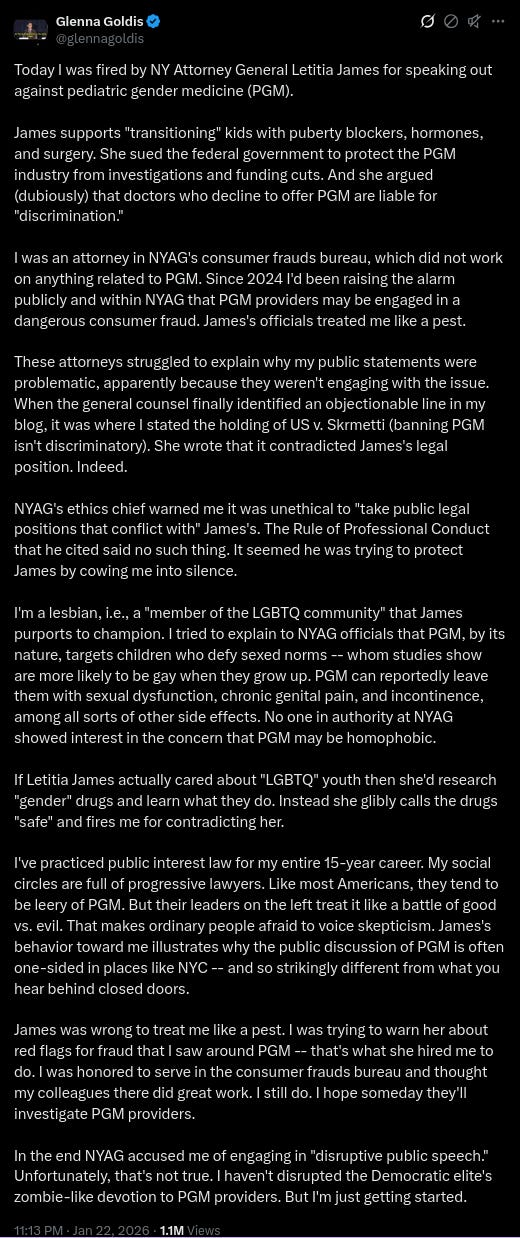
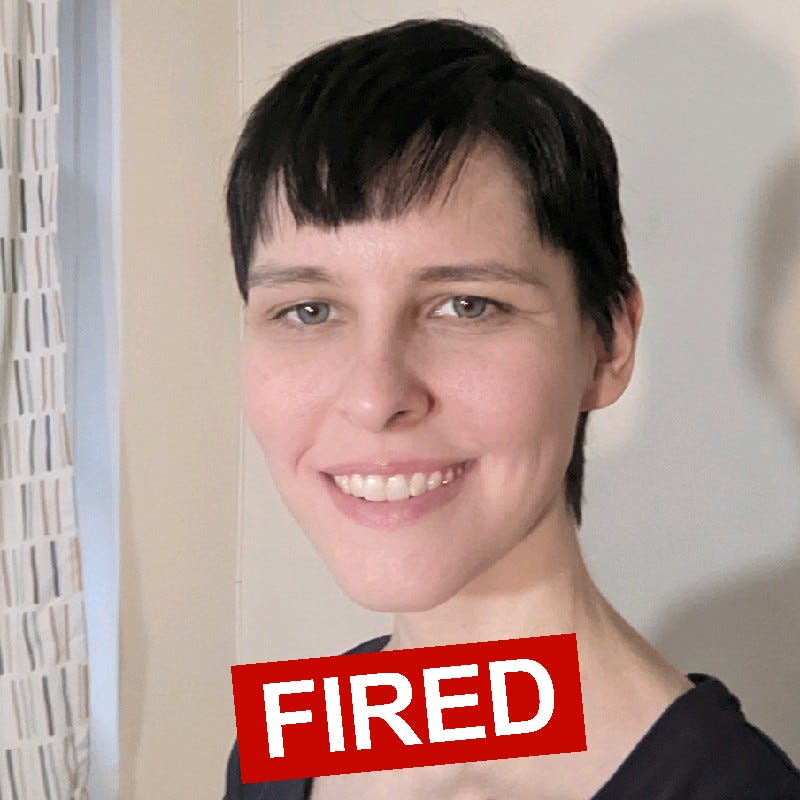
She says one thing. They say another. And the discrepancy is where the real story lives.
But Goldis needs her version of events to be the definitive version. Because a story about getting fired for workplace misconduct is considerably less appealing than a story about heroic whistleblowing. So she has spent the last 48 hours working very hard to collapse these two distinct concepts into one martyrdom narrative, using remarkably the exact same techniques we identified and debunked in her original article about gender medicine.[3]
If that is not poetic justice, I honestly do not know what is.
Let us examine her claims with the same rigor she so conspicuously failed to apply to her own work.
What Goldis Claims (And What Is Actually Being Said)
Goldis’s Central Claim:[1]
“Today I was fired by NY Attorney General Letitia James for speaking out against pediatric gender medicine.”
Later, she also states:[1]
“In the end NYAG accused me of engaging in ‘disruptive public speech.’”
What NYAG Actually Said:
The attorney general’s office confirmed the termination through a spokesperson but has not provided the full details of their reasoning in any publicly available statement reviewed by this author.[2] This is notable because it means Goldis is essentially the only source characterizing her own firing. She is asking readers to take her word for what NYAG said about her.
In a situation involving workplace conduct, that should raise an immediate red flag.
The Language She Put in Their Mouths
Here is the most revealing discrepancy in Goldis’s statement. She repeatedly claims that NYAG “treated me like a pest.”[1] This specific language appears nowhere in any official statement from the attorney general’s office that we can verify.
What Goldis actually quotes from NYAG:[1]
“When the general counsel finally identified an objectionable line in my blog, it was where I stated the holding of US v. Skrmetti (banning PGM isn’t discriminatory). She wrote that it contradicted James’s legal position.”
That is the only direct quotation Goldis provides from anyone at NYAG. It describes a conflict between her public statements and the attorney general’s legal position. It does not support her characterization of being treated “like a pest.”
Why does this matter? Because describing yourself as being treated “like an insect” triggers emotional responses that “your public statements contradict the attorney general’s legal position” does not. One is about your humanity being diminished. One is about your job performance.
This is a classic narrative manipulation technique: when the actual facts do not support your story, change the story to fit the emotional response you want to generate. Put words in people’s mouths if they did not use the words you need.
It is the same technique she used throughout her original article about gender medicine, which relied on decontextualizing quotes and presenting them as evidence of conspiracy. Now she is using it to characterize her own firing.
The Irony Is Real (and thick)
Here is where schadenfreude becomes educational:
Goldis works in the Bureau of Consumer Frauds and Protection.
Her job is identifying misrepresentation, deception, and fraud. Her official role is protecting consumers from people who obscure facts, cherry-pick evidence, and ask you to trust their version of events instead of verifiable documentation.
She was then terminated from that office.
And in her explanation for that termination, she does the exact thing she is supposed to protect consumers from: she presents a narrative that requires readers to trust her version of events, to collapse two distinct situations into one, and to accept her framing without demanding independent verification from NYAG.
If this were a cartoon, the irony would need a laugh track.
Breaking Down Her Specific Claims
Claim 1: “I was fired for speaking out against pediatric gender medicine.”
What She Actually Says:[1]
“James’s officials treated me like a pest. These attorneys struggled to explain why my public statements were problematic, apparently because they weren’t engaging with the issue. When the general counsel finally identified an objectionable line in my blog, it was where I stated the holding of US v. Skrmetti (banning PGM isn’t discriminatory). She wrote that it contradicted James’s legal position. Indeed.”
Let Us Unpack This:
Notice what she has done here. She has described a workplace disagreement about whether her public statements align with her employer’s legal positions, which is a legitimate management concern, and presented it as evidence that she was fired for her views.
These are not the same thing.
Here is a comparison: If a lawyer at a pro-life organization’s legal department publicly argued that abortion restrictions are unconstitutional, and their employer said “this contradicts our institutional legal position,” that is not persecution. That is workplace management. The employee is free to hold those views. The employer is free to question whether that employee should continue representing the organization.
More importantly: Goldis was not in a division that worked on gender medicine. She worked in Consumer Frauds. She was not hired to evaluate gender medicine policy. She was hired to investigate fraud. By her own admission, she spent time after she was hired raising concerns “publicly and within NYAG” about issues outside her portfolio.[1]
That is not whistleblowing. That is a consumer fraud lawyer deciding that her personal concerns about gender policy supersede the actual work she was hired to do.
The Real Issue: It is entirely reasonable for an employer to say, “We hired you to investigate consumer fraud. We did not hire you to develop personal crusades about healthcare policy outside your job description. When your personal crusade becomes a recurring management problem, we have a problem.”
Goldis frames this as persecution for her views. It is actually standard workplace management of someone who stopped doing her assigned job.
Claim 2: “I was trying to warn her about red flags for fraud that I saw around PGM. That is what she hired me to do.”[1]
The Problem:
She was hired to work in Consumer Frauds. She was not hired to investigate gender medicine. These are distinct things.
It is like a financial crimes investigator at the FBI claiming they were hired to investigate pharmaceuticals, and when their supervisors point out that their job is financial crimes, insisting “but this is what I was hired to do!” No. You were hired to do X. You decided to do Y. Your employer noticed. That is not persecution. That is how employment works.
More specifically: Gender medicine was not the purview of her office. There is no indication from any available documentation that identifying “fraud in gender medicine” was part of the Consumer Frauds Bureau’s mandate. She did not discover fraud in her actual job and escalate it through proper channels. She developed a personal crusade, published articles on her own Substack, went on podcasts, and kept doing it despite her office’s apparent lack of enthusiasm.
When your employer starts treating you “like a pest” (or, as she characterized it, with apparent frustration) for repeatedly pursuing initiatives outside your job description, that is not a red flag about your employer. That is a red flag about your employment situation.
As we detailed in our extensive analysis of her original article,[3] Goldis’s claims that gender affirming care constitutes consumer fraud do not withstand scrutiny against available evidence. So when she claims she was raising “red flags for fraud,” she was not identifying actual fraud within her job scope. She was attempting to impose her ideological conclusion about PGM onto the Consumer Frauds Bureau’s actual mandate. That is not whistleblowing. That is ideology seeking a home in her job description.
Claim 3: The Ethics Chief Said It Was “Unethical” to Take Public Positions Conflicting with James’s[1]
What She Says:
“NYAG’s ethics chief warned me it was unethical to ‘take public legal positions that conflict with’ James’s. The Rule of Professional Conduct that he cited said no such thing. It seemed he was trying to protect James by cowing me into silence.”
The Problem:
She does not quote the rule. She does not quote the ethics chief’s exact words. She asserts that what he said “said no such thing,” but provides zero evidence for this claim. She is asking readers to trust her interpretation of a confidential workplace conversation.
This is the same unsubstantiated claim fallacy she used throughout her original article about gender medicine.
And here is the thing: There are legitimate rules about government employees taking public legal positions that conflict with their agency’s positions. It is not about censoring speech. It is about conflict of interest. A lawyer representing a government agency cannot simultaneously argue that the agency’s legal position is wrong without creating a fundamental conflict.
Is that unjust? That is a legitimate policy debate. But Goldis frames it as if she was being told something unreasonable, when in fact workplace ethics rules about conflicts of interest are pretty standard.
What is particularly telling: She frames this as evidence that the ethics chief “was trying to protect James by cowing me into silence.” But the actual explanation is more straightforward: He was pointing out a conflict of interest that her employer had every right to address.
Notice the pattern? When someone disagrees with her, she assumes the motive must be bad faith or institutional protection. She does not consider the simpler explanation: they disagreed.
The Structural Problem That Persists Regardless:
Here is the critical point Goldis glosses over: Even if she had conducted all of this activism on her own time, the conflict would remain. A government attorney cannot publicly argue that her employer’s legal position is wrong without creating a fundamental structural problem. It does not matter if she did it on weekends or vacation time. The issue is not work-life balance. The issue is that she was representing NYAG while simultaneously arguing, publicly and repeatedly, that NYAG’s legal positions were incorrect. As we detailed in our original analysis,[3] this is a reasonable institutional concern regardless of when she did the work.
The ethics chief’s warning was not about censoring speech or protecting the attorney general’s feelings. It was about a conflict of interest that any competent government office has every right to address. Goldis’s refusal to acknowledge this distinction is telling.
Claim 4: “The public discussion of PGM is one-sided in places like NYC”[1]
What She Actually Says:[1]
That makes ordinary people afraid to voice skepticism. James’s behavior toward me illustrates why the public discussion of PGM is often one-sided in places like NYC and so strikingly different from what you hear behind closed doors.
The Reality:
Here is the sleight of hand. Goldis published multiple articles on Substack. She went on podcasts. She made public statements. The Daily Caller covered her firing sympathetically. Conservative outlets amplified her narrative. She was not arrested, deplatformed, or legally silenced.[4][5][6] Her speech was not suppressed.
What was actually suppressed was her ability to spend work hours and office resources on a personal crusade that had nothing to do with her actual job responsibilities.
She conflates “my employer disagreed with my public statements and told me that my public statements contradicted the attorney general’s legal position” with “the public discourse is one-sided in NYC.” These are not the same thing.
If NYC discourse on PGM were truly one-sided, her story would not have gotten the coverage it did. If she were being silenced, she would not have a platform large enough to claim she is being silenced. The irony is complete.
More revealing: She claims to hear different opinions “behind closed doors” but provides no evidence of this. She is asking readers to trust her about private conversations while she herself put words in NYAG’s mouth about treating her “like a pest.” She accuses her employer of creating a chilling effect on speech while her own employer appears to have had reasonable concerns about her work performance.
The real one-sided discussion here is the one Goldis is conducting on her own platform, where she gets to characterize her employment termination without independent verification.
The Fundamental Conflict:
More fundamentally: Goldis cannot escape a basic conflict of interest by claiming the discourse is one-sided. She was a government attorney employed to represent NYAG while simultaneously arguing, publicly and repeatedly, that NYAG’s legal positions were incorrect. This conflict exists regardless of whether she conducted her activism on work time or her own time. As we detailed in our original analysis,[3] this is a structural problem that any employer has every right to address. The fact that she has platforms does not negate the institutional conflict between being a government representative and a prominent critic of that government’s legal stance.
The Pattern Recognition: Same Tricks, New Context
Here is what is genuinely fascinating about Goldis’s response to her firing: It uses the identical narrative techniques she employed in her original article about gender medicine. For detailed analysis of those techniques in her original work, see our comprehensive debunking.[3]
In that original article, we identified:[3]
- Cherry-picking context
- Making claims without evidence
- Using identity as a shield against criticism
- Framing consequences as persecution
- Assuming bad faith motives
Goldis is now doing all of these things again, just with different subject matter.
She presents her firing as purely about her views, while omitting that her employer’s characterization may differ.
She asserts the ethics chief was wrong without quoting the relevant rule or his statement.
She emphasizes “I’m a lesbian” and “James purports to champion the LGBTQ community” as if her identity should exempt her from standard workplace expectations.
When her employer objects to her work performance, she frames it as silencing.
She suggests the ethics chief was “trying to protect James by cowing me into silence” rather than considering that he might have been addressing an actual conflict of interest.
Most tellingly, she invents the language about being treated “like a pest” to create an emotionally resonant victim narrative, when the actual conflict was about workplace management and job scope.
This same narrative strategy shaped her entire online persona as “Unyielding Bicyclist.”[7][8][9] The pen name itself positions her as a victim of institutional pressure who will not break. Her social media posts under both identities follow the same pattern: positioning marginalized groups as wielding inappropriate power, claiming she is fighting impossible odds, using dehumanizing language about trans people and the “trans movement” to justify her concern, and positioning herself as the rational voice being silenced.[7][8][9]
The firing gives her the ultimate narrative tool. Now she is not just critiquing a movement. Now she is a martyr to it. And so she adjusts the facts to fit that narrative: inventing the language about being treated “like a pest” to make her story more compelling.
This is not an accident. This is a method.
What Is Quite Revealing Here
The really important part is not that Goldis lost her job. People lose jobs for legitimate reasons all the time. What is revealing is how she is explaining that job loss.
She is demonstrating, in real time, that her approach to evidence and argumentation is consistent. She builds narratives. She supports them selectively. She asks readers to trust her interpretation. When independent verification exists, she either omits it or recharacterizes it. And when consequences arrive, she reframes them as persecution.
This pattern spans her entire public career, from “Unyielding Bicyclist” to “Glenna Goldis” to her statement about her termination.
The Inconvenient Truth
Here is what a straightforward assessment of Goldis’s termination might actually say:
“We terminated Glenna Goldis because her employment situation was no longer viable. She was hired to work in Consumer Frauds on issues within that bureau’s purview. She repeatedly spent work time and resources pursuing personal political projects outside her job description. When supervisors addressed this, she continued. She made public statements that contradicted the attorney general’s legal positions while employed as her representative. This created an untenable conflict of interest. We gave her opportunities to realign with her actual job responsibilities. She did not. This is a straightforward employment decision about job performance and professional conduct, not a statement about whether her personal political views are correct.”
That is a boring explanation. It does not make for good headlines. It does not position James as silencing dissent. But it is the explanation consistent with what we know about what happened.
And Goldis is doing narrative gymnastics to transform it into something else: a story of martyrdom, persecution, and institutional silencing. Which is what she does. Every single time.
The Bottom Line
Goldis was not fired for her views on gender medicine. She was fired from the Consumer Frauds Bureau, where gender medicine is not her portfolio, for repeatedly violating office protocols and pursuing personal projects outside her job scope. And even if every one of those violations had occurred on her own time, the fundamental conflict of interest that a government attorney cannot publicly argue against her employer’s legal positions remains legitimate.
Is it possible that her office’s treatment of her was unfair? Sure. That is a legitimate workplace grievance. Take it through HR. File a complaint. Pursue legal remedies. Those exist.
But what is not okay is claiming persecution while using the exact narrative manipulation techniques that should have gotten you fired in the first place. Leveraging invented inflammatory language “treated me like a pest” to create an emotional victim narrative. Making claims without evidence. Asking readers to trust her version of events over independent verification.
Goldis built a career, however briefly, on cherry-picked data, logical fallacies, and selective presentation of facts. When we debunked her article about gender medicine, she learned nothing about accuracy or evidence. She learned that if the facts do not fit your narrative, you just narrate harder.
Now she is doing it about her own job loss.
And that is the real bad fact: not that Goldis lost her job, but that she is unable or unwilling to acknowledge reality when it contradicts the story she needs to tell.
At least she is consistent. We will give her that much.
Citations
[1] Goldis, G. (2026, January 23). Statement on termination [Social media post]. Retrieved from https://x.com/glennagoldis/ (full post below, as screenshot)
[2] New York Post. (2026, January 24). Letitia James accused of firing lawyer who opposes child sex changes. Retrieved from https://nypost.com/2026/01/23/us-news/letitia-james-accused-of-firing-lawyer-who-opposes-child-sex-changes/
[3] PITT. (2025). Bad facts indeed: Debunking ‘trans away the gay.’ People with Inconvenient Truths about Transphobes. Retrieved from https://pittpeople.substack.com/p/bad-facts-indeed-debunking-trans
[4] Daily Caller. (2026, January 23). Tish James fires lesbian staffer who opposed child sex changes. Retrieved from https://dailycaller.com/2026/01/23/letitia-james-glenna-goldis-child-sex-changes/
[5] Daily Caller News Foundation. (2026, January 23). Tish James fires lesbian staffer who opposed child sex changes. Retrieved from https://dailycallernewsfoundation.org/2026/01/23/letitia-james-glenna-goldis-child-sex-changes/
[6] 11BolaBoanza. (2026, January 24). Letitia James accused of firing lawyer who opposes child sex changes. Retrieved from https://11bolabonanza.com/2026/01/23/us-news/letitia-james-accused-of-firing-lawyer-who-opposes-child-sex-changes/
[7] Dansky, K. (2025, January 31). Listen to Woman’s Hour: The TERF Report. Woman’s Hour: The TERF Report. Retrieved from https://karadansky.substack.com/p/listen-to-womans-hour-the-terf-report-3f4
[8] Broadview. (2023, August 3). David vs. Goliath and the ACLU, by Glenna Goldis. Retrieved from https://www.broadview.news/p/david-vs-goliath-and-the-aclu
[9] The Distance Magazine. (2024, June 11). Chase Strangio, ACLU implicated in judge shopping scandal. Retrieved from https://www.thedistancemag.com/p/chase-strangio-aclu-implicated-in